

Washington Gov. Bob Ferguson signed an executive order creating the Washington Space Council Monday evening at Space Northwest’s Seattle Space Week kickoff event, establishing a new statewide body focused on strengthening Washington’s position in the rapidly growing commercial space economy, according to a news release.
The size of that economy in Washington is significant.
The space sector directly supports about 12,340 jobs, $8.1 billion in economic output, and $2.3 billion in labor income in Washington, according to new preliminary research commissioned by Space Northwest, a nonprofit industry association. When indirect and induced impacts are included, Washington’s space sector supports approximately 34,200 jobs, $12.4 billion in statewide economic output, and $3.9 billion in labor income, with every direct space-sector job supporting an additional 1.8 jobs in Washington, Space Northwest said in its news release announcing the Space Council and research findings.
Other preliminary findings highlighted that 94% of Washington’s direct space jobs are concentrated in advanced manufacturing, engineering, R&D, computing, electronics and hardware, underscoring the technology-intensive nature of the industry, Space Northwest said. The industry group also presented an analysis that found more than 68% of all active satellites currently in Earth orbit were manufactured in Washington — more than twice as many as the rest of the world combined. At least eight Washington companies currently manufacture or operate active satellites, with more than 10 others developing or building future spacecraft, the release added.
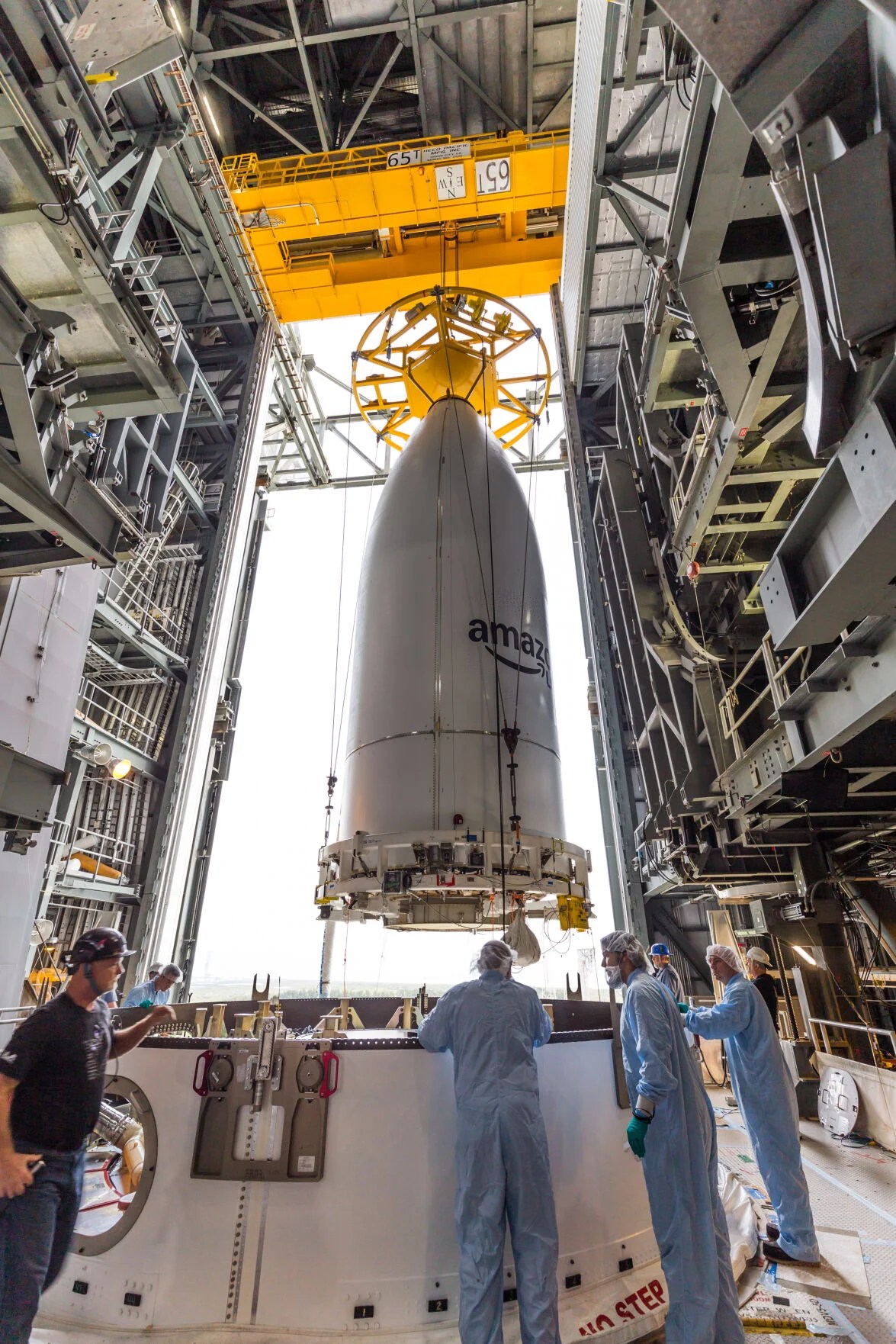
Among current local manufacturers, SpaceX makes its Starlink satellites in Redmond and Amazon Leo makes its broadband satellites in Kirkland.
Additionally, Space Northwest said 24 space startups headquartered or operating in Washington have collectively raised more than $4.3 billion, including more than $3.7 billion since 2021, across areas that include satellites, launch, communications, Earth observation, orbital data centers, ground systems, in-space servicing, power, and software.
The 23-member public-private Space Council, meanwhile, includes leaders from commercial space companies, aerospace and advanced manufacturing, labor, higher education, local government, and Legislature. The Washington State Department of Commerce will provide staffing and logistical support, and the council will assess Washington’s capabilities and identify investments, policies, and partnerships that can support continued industry growth and economic opportunity, Space Northwest said.
The council will also look for ways the state might be able to develop Washington-based commercial launch capabilities, according to a separate news release from the governor’s office.
“Washington is not merely a participant in the space economy, we helped build it,” Ferguson said in the Space Northwest release. “Our state has an extraordinary concentration of talent, innovation, and advanced manufacturing. Seattle Space Week puts that strength on display while creating opportunities to grow good jobs, attract investment, and keep Washington at the forefront of the expanding space economy.”
Kelly Maloney, co-founder and chair of the Space Northwest board of directors and CEO of Pacific Aerospace Launch & Spaceport, added in a statement, “Creating a Washington Space Council recognizes that space is no longer a niche sector of our economy. It is an economic engine with enormous potential for Washington.”
Maloney added, “We already have one of the most concentrated space technology ecosystems in the world. The opportunity now is to make sure Washington has the infrastructure, workforce, policy environment and investment strategy necessary to keep that industry growing here.”
The council will provide findings and recommendations to Ferguson through advisory reports, with a focus on strengthening Washington’s global competitiveness, advanced manufacturing base, ability to attract investment, and capacity to create high-quality jobs, Space Northwest said.
Council members include Mayor Angela Birney, city of Redmond; Betsy Cantwell, president, Washington State University; Jason Chan, IAM 751; Trever Devaney, Hi-Rel Laboratories; Colin Doughan, Gravitics; Michael Edmonds, Blue Origin; and several others.

Space awards
Monday evening’s Space Week kickoff event also included Space Northwest’s annual awards recognizing organizations helping advance Washington’s space economy.
The city of Kent received Space Northwest’s Municipal Award for its work supporting and advancing the space industry and economic development.
Bothell-based Portal Space Systems was named Emerging Space Company of the Year, recognizing its growth and development of next-generation spacecraft and orbital mobility capabilities.
SpaceX was named Large Space Company of the Year, recognizing its significant space manufacturing presence in Washington and the scale of satellite production associated with its Starlink operations in Redmond.
The awards were presented as part of the Seattle Space Week kickoff, which brought together leaders from industry, government, academia, investment, and the broader space community at The Museum of Flight in Seattle.
Seattle Space Week 2026 runs through Oct. 4 under the theme “Scaling the Space Economy.” Organized by Space Northwest, the week brings together industry leaders, founders, investors, researchers, policymakers, and community partners from across the region, with programming spanning investment, entrepreneurship, manufacturing, space technology, national security, professional networking, and community events.